Strategy & Growth · 3 min read
Full-Funnel Digital Marketing for Growing Brands
Attention, trust, conversion: one journey, not three departments. The wins come from moving learnings between channels.
Marketing becomes difficult when every channel is managed as a separate project.
The social team publishes. The creator team runs collaborations. The ads team buys media. The SEO team publishes pages.
The customer does not experience those departments separately.
They experience one brand.
The three simple stages
A useful full-funnel model is:
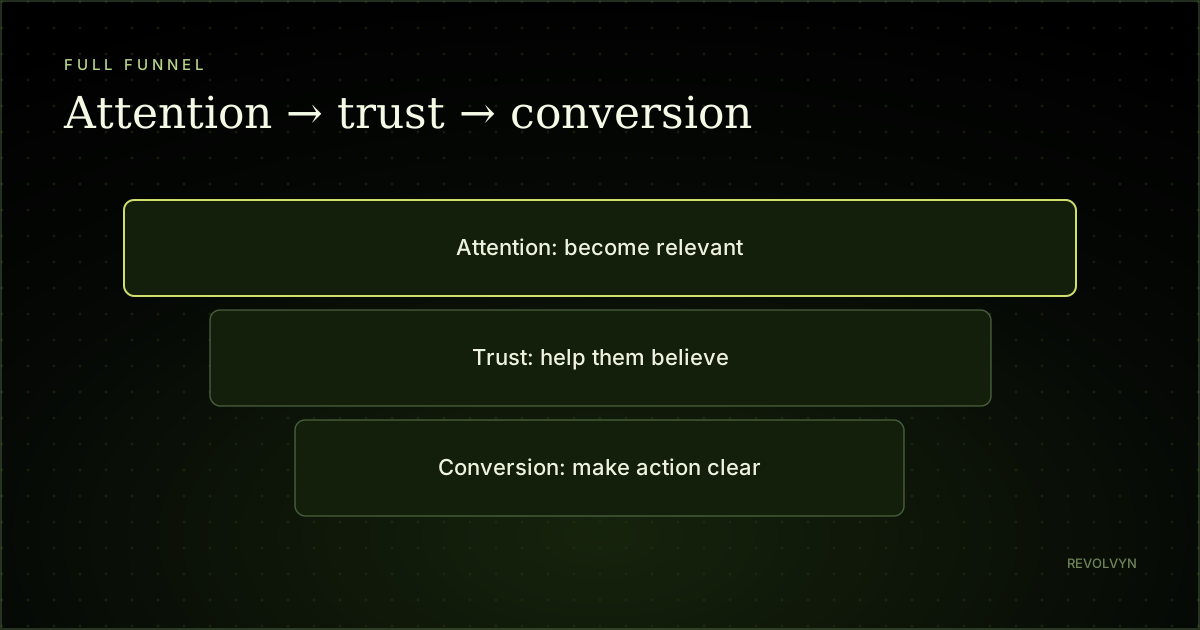
Attention → Trust → Conversion
At the attention stage, the job is to become relevant.
At the trust stage, the job is to help the audience understand and believe.
At the conversion stage, the job is to make the next action clear.
Real customer journeys are messier than these three boxes, but the framework is useful for planning.
What belongs at the top?
Top-of-funnel creative might include:
- creator videos
- short-form content
- visual product demonstrations
- educational content
- brand films
The exact mix depends on the audience.
What builds trust?
Trust can come from:
- useful explanations
- demonstrations
- creator perspectives
- product details
- proof of work
- consistent brand communication
This is where content, influencer marketing, SEO and social media can overlap.
What converts?
Conversion-oriented activity can include:
- paid search
- Meta campaigns
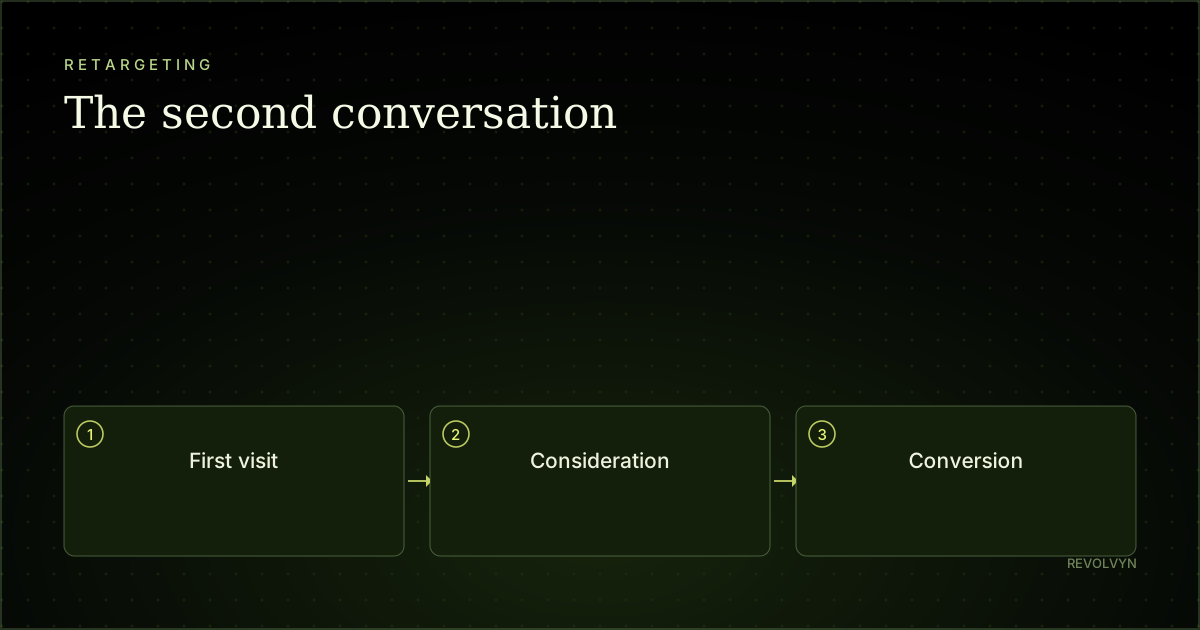
- retargeting
- focused landing pages
- conversion optimisation
- direct-response creative
REVOLVYN describes its model as one team handling strategy, creative, media and reporting, with services spanning performance marketing, content production, SEO, social media, influencer marketing and AI content.
Why the handoffs matter
Imagine a creator campaign discovers that customers respond strongly to one product benefit.
That
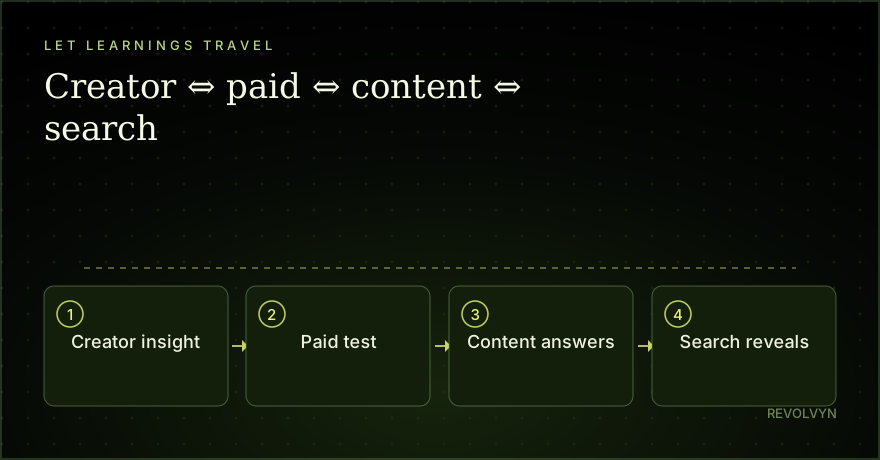
It can influence paid creative.
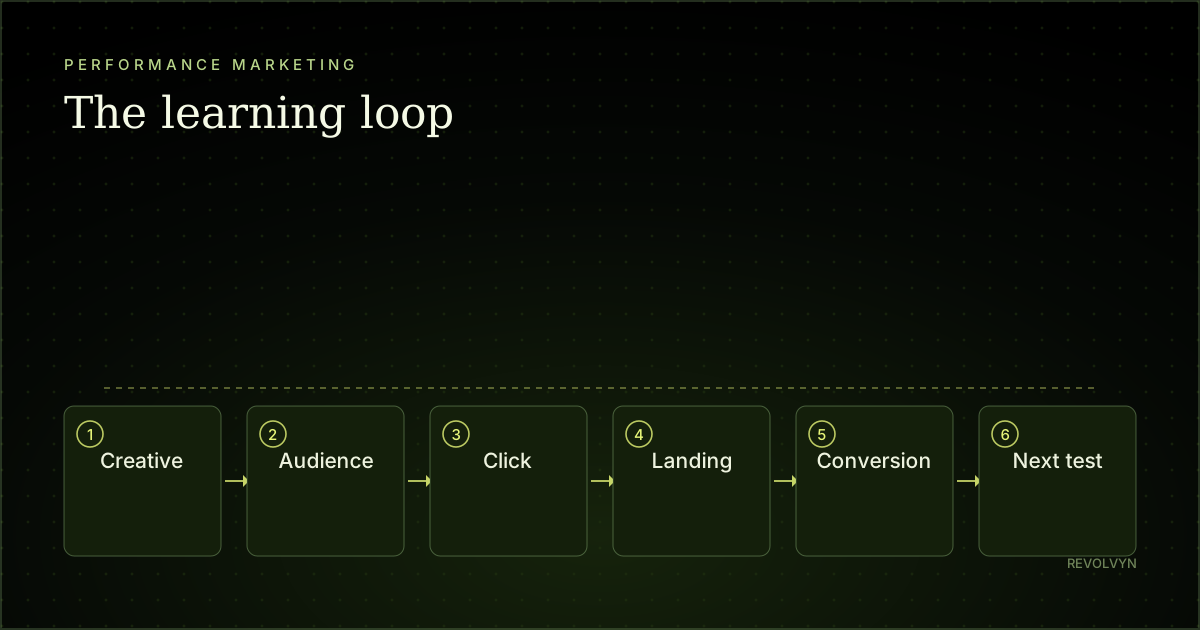
If paid advertising reveals a strong hook, the content team can produce more variations around it.
If search data shows a repeated customer question, social content can answer it.
The value comes from the information moving between channels.
Full funnel does not mean doing everything
A full-funnel strategy does not require a brand to run every possible channel.
It means understanding the role of the channels that are actually being used.
A smaller brand may begin with content and Meta testing.
Another may have strong search demand and start with PPC and SEO.
Another may need creators because trust is the biggest barrier.
The right funnel follows the business problem.
The useful question
Instead of asking:
“Which marketing channel should we add?”
ask:
“Where are we losing the customer journey?”
If nobody knows the brand, solve attention.
If people know the brand but do not understand the offer, solve communication.
If people understand but do not convert, investigate trust, offer, landing experience and friction.
That is what full-funnel marketing is really about.
Editorial note — This article is written for educational purposes and uses examples and capabilities documented on REVOLVYN's public website. Specific campaign outcomes, pricing and client-specific performance should be verified for the relevant engagement rather than assumed from general marketing guidance.
Related articles
Talk to REVOLVYN about your growth plan.
Have a campaign in mind? Start with a free 15-minute consultation and we’ll reply within one business day.
Contact REVOLVYN