Performance & Paid Media · 3 min read
How Retargeting Works: A Practical Guide
Most visitors don’t buy on the first visit. Retargeting works when the second message assumes the first conversation already happened.
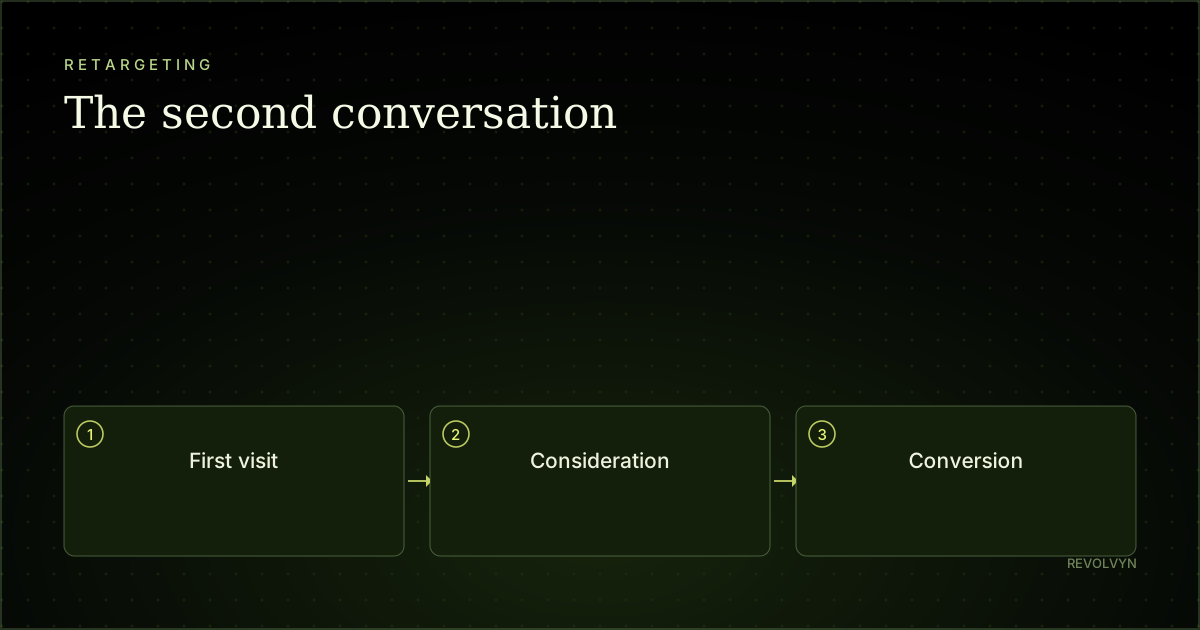
A person sees an ad, visits a website, watches a product video and leaves.
That does not necessarily mean the campaign failed.
People compare products. They get distracted. They need more information. They may not be ready to buy on the first visit.
Retargeting exists because the second conversation can be different from the first.
What retargeting actually means
Retargeting is a way of showing relevant advertising to people who have already interacted with a brand or its marketing ecosystem.
The important word is already.
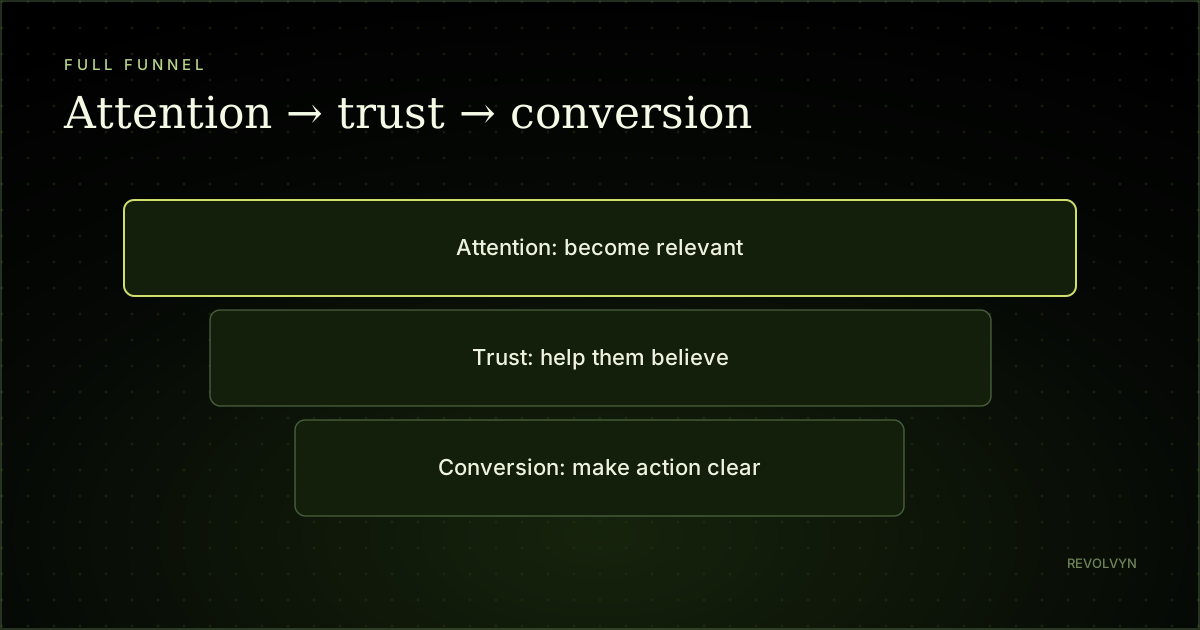
A cold audience may need to understand the problem and the product. Someone who has already visited the product page may need a different message.
That difference is where retargeting becomes useful.
REVOLVYN includes retargeting as part of its performance marketing workflow, alongside full-funnel strategy, creative testing, conversion optimisation and weekly reporting.
Why one ad rarely fits every stage
Consider a simple D2C journey.
A new prospect may need:
- the problem explained
- the product introduced
- a reason to care
A warm visitor may need:
- proof
- product details
- answers to objections
- a reminder of the value
A returning visitor may need a more direct conversion message.
The creative should reflect the audience's previous relationship with the brand.
Retargeting is not just “show the same ad again”
Repeated exposure can become irritating when the message does not change.
A be
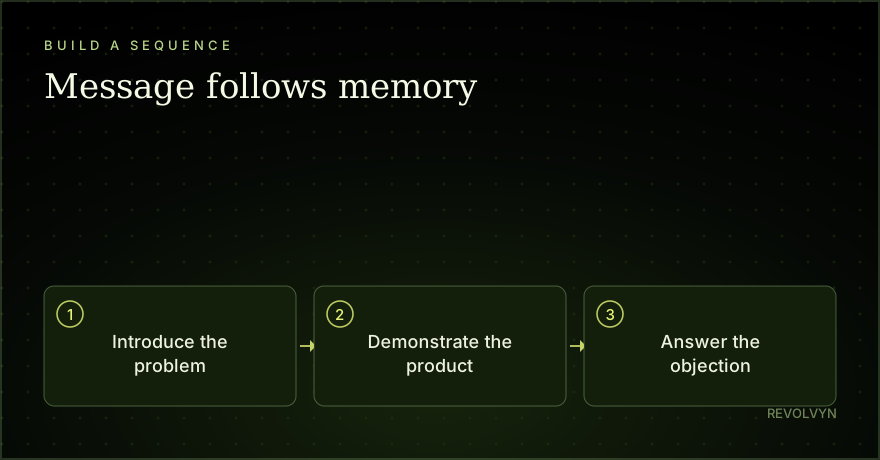
For example:
First interaction: introduce the problem and product.
Second interaction: demonstrate how the product works.
Later interaction: answer a common objection or show another use case.
The exact sequence depends on the brand, product and available audience data.
Where creative matters
Retargeting is often treated as a media setting. It is also a creative problem.
If a person has already watched a product demonstration, showing the exact same introduction may waste the advantage of knowing that person's previous interaction.
Instead, the next creative can assume a little more context.
This is one reason REVOLVYN combines performance marketing with content production. The team can develop multiple creative angles rather than expecting one asset to serve every stage of the funnel.
What should you measure?
Do not judge retargeting only by clicks.
Look at the business outcome and compare it with the role the audience is supposed to play.
Useful questions include:
- Are returning visitors converting?
- Which message is moving people forward?
- Are frequency and audience size creating fatigue?
- Is the landing page consistent with the ad?
- Does the campaign produce useful customers rather than just cheap traffic?
The right metrics depend on the campaign objective.
When retargeting becomes complicated
Retargeting gets harder when a brand has many products, different customer journeys or multiple stages of intent.
A large product catalogue may require different messaging. A high-consideration purchase may need more education. A repeat-purchase business may have a completely different retention journey.
There is no single “best retargeting campaign.”
The useful principle is simpler:
Use what you already know about the audience to make the next message more relevant.
That is what makes retargeting more than simply following visitors around the internet.
Editorial note — This article is written for educational purposes and uses examples and capabilities documented on REVOLVYN's public website. Specific campaign outcomes, pricing and client-specific performance should be verified for the relevant engagement rather than assumed from general marketing guidance.
Related articles
Choosing what to do next?
Get a second opinion before you commit budget. Start with a free 15-minute consultation — no pricing games, no guaranteed miracles.
Contact REVOLVYN