Performance & Paid Media · 4 min read
What Is Performance Marketing? A Guide for Brands
Performance marketing is not running ads and checking numbers — it is a feedback loop where creative, audience, landing experience and measurement sharpen each other.
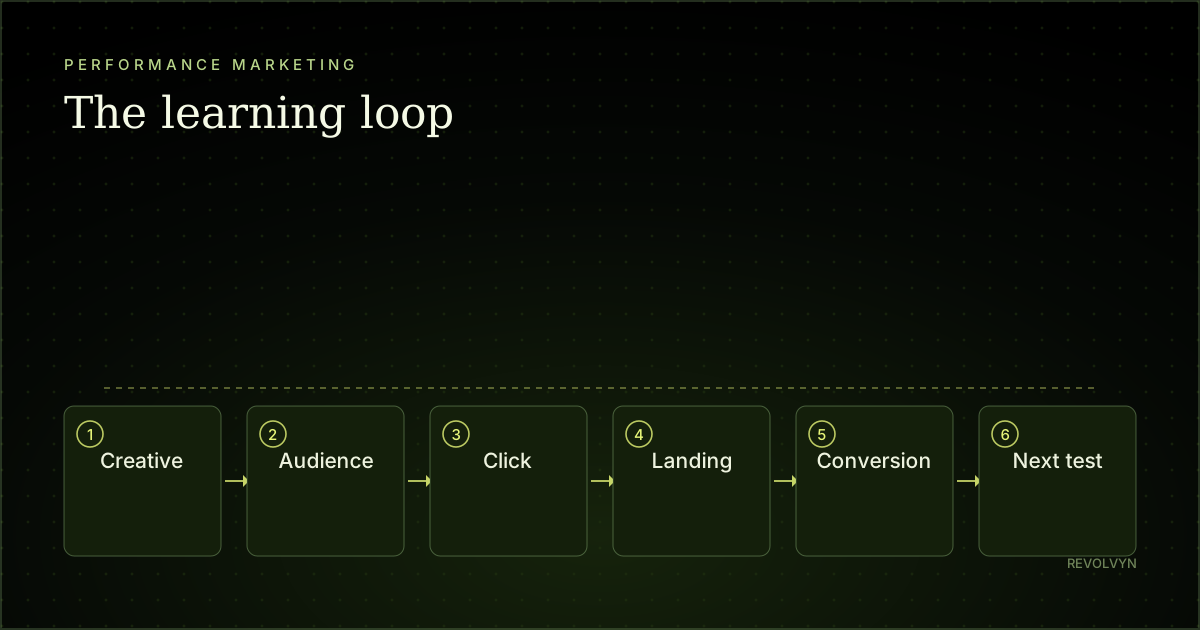
Performance marketing gets described as if it simply means “running ads and checking the numbers.” That is the easy definition. The harder part is building a system where creative, audience, landing experience and measurement work together.
For a growing brand, that distinction matters.
A campaign can have good targeting and still struggle because the creative does not earn attention. It can have a strong ad and still lose the sale because the landing page is unclear. It can generate cheap clicks that never become useful customers. Performance marketing is the process of connecting those pieces and learning from what actually happens after money is spent.
Performance marketing is a feedback loop
A useful way to think about performance marketing is:
The loop matters more than any individual ad.
At REVOLVYN, the performance workflow includes Meta ads, Google Ads and PPC, retargeting, full-funnel testing, creative testing, landing-page recommendations, conversion optimisation, audience segmentation and weekly reporting. The service is designed around testing and iteration rather than treating one campaign setup as a finished product.
That approach also changes how creative is produced. If an ad is being used for performance, the team needs to know what is being tested and why.
What should a brand test first?
There is no universal testing order, but a sensible starting point is the creative.
Test the promise first. Then test the way that promise is delivered.
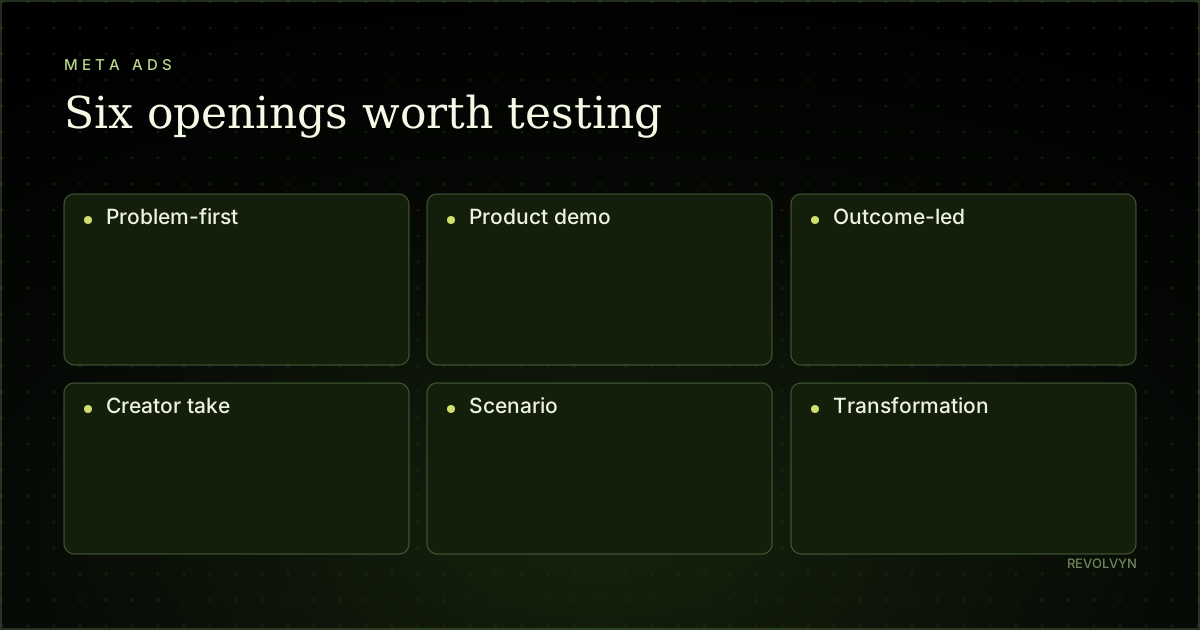
For example, two videos can sell the same product but use completely different openings. One might begin with a problem the customer already recognises. Another might demonstrate the product immediately. If one gets stronger attention and downstream behaviour, that is useful information.
From there, a brand can test formats, audiences, offers and landing experiences.
The goal is not to make every variable different at the same time. If everything changes together, it becomes difficult to understand what caused the result.
Where retargeting fits
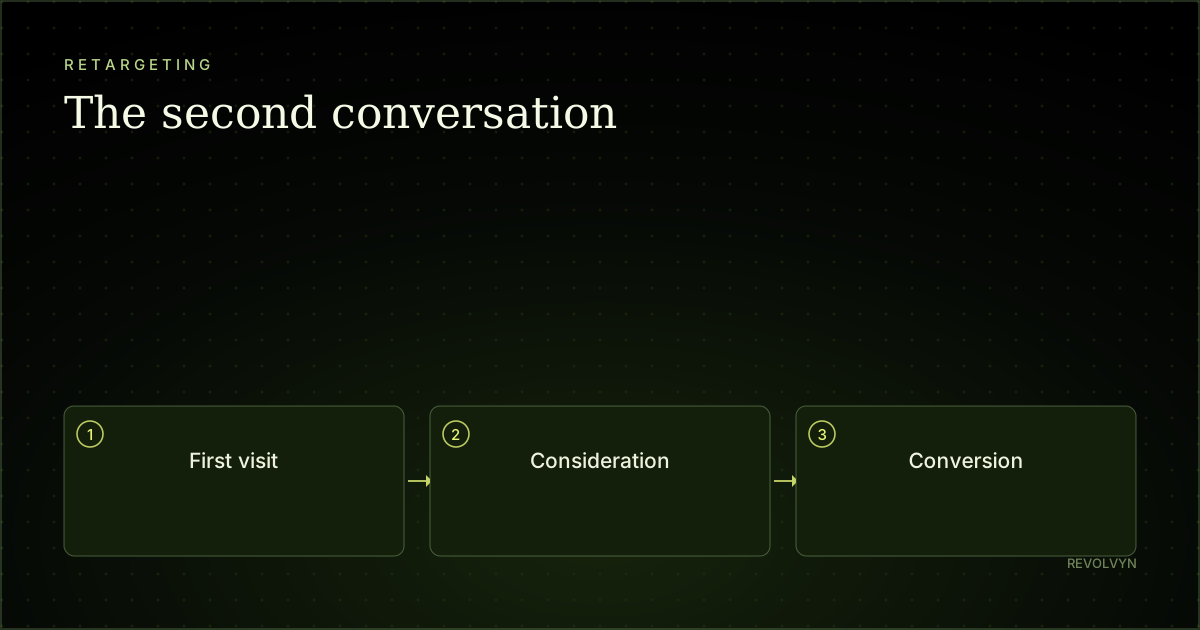
Most customers do not move from first impression to purchase in one perfectly straight step.
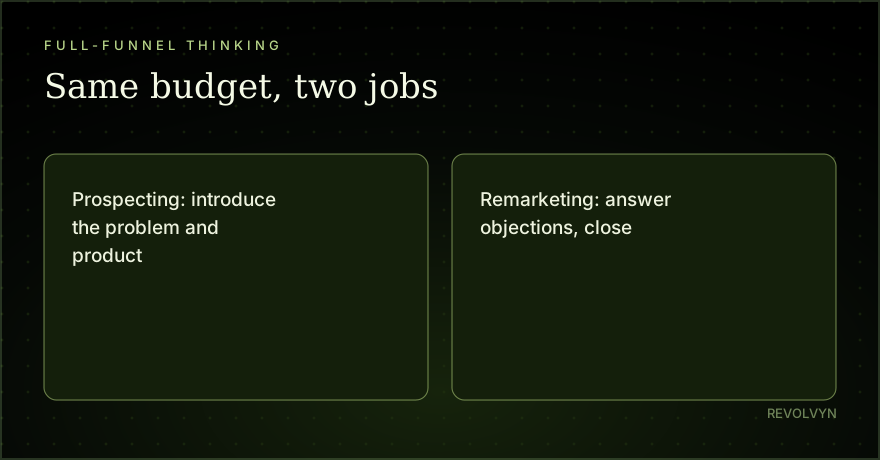
Retargeting gives a brand a way to continue the conversation with people who have already interacted with its content, website or campaign. The message can be different from the first-touch creative because the audience has already seen something.
That is why full-funnel thinking is useful. Prospecting and remarketing should not necessarily receive identical creative.
Performance marketing is not just a dashboard
A dashboard can tell you what happened. It cannot automatically tell you what to make next.
Good
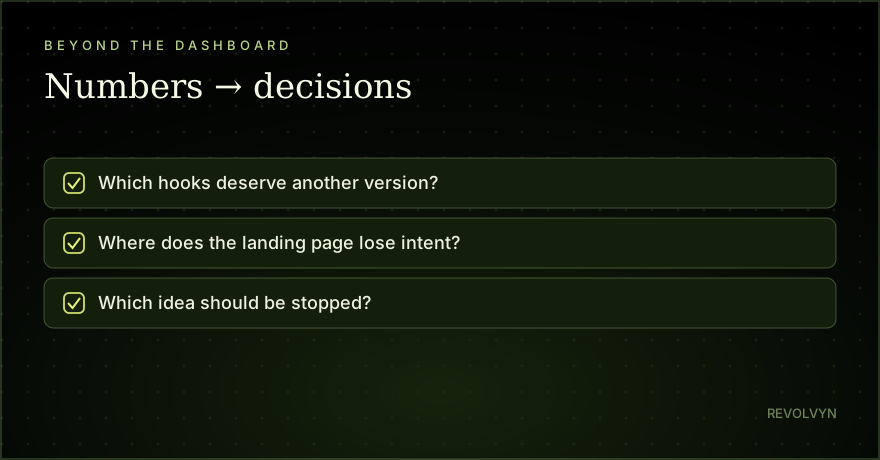
- Which hooks deserve another version?
- Which creative format should be tested again?
- Where does the landing experience lose intent?
- Which audience deserves another test?
- Which campaign should be scaled?
- Which idea should be stopped?
REVOLVYN's research page describes its own process as creative testing inside live Meta campaigns, followed by testing of formats and audiences, with retargeting and full-funnel testing separating prospecting winners from remarketing closers.
When should a brand use a performance marketing agency?
An outside team becomes useful when the challenge is bigger than campaign setup.
For example, a growing brand may need a combination of creative production, paid media, landing-page thinking, conversion tracking and regular testing. Keeping those functions completely separate can make feedback slower.
REVOLVYN combines performance marketing with content production, SEO, social media, influencer marketing and AI creative, which means the same brand can test creative and media together rather than treating them as unrelated activities.
The important question is not “How many ads can we launch?”
It is:
Can we build a repeatable learning loop where every campaign makes the next campaign smarter?
That is the real job of performance marketing.
Editorial note — This article is written for educational purposes and uses examples and capabilities documented on REVOLVYN's public website. Specific campaign outcomes, pricing and client-specific performance should be verified for the relevant engagement rather than assumed from general marketing guidance.
Related articles
Talk to REVOLVYN about your growth plan.
Have a campaign in mind? Start with a free 15-minute consultation and we’ll reply within one business day.
Contact REVOLVYN