Performance & Paid Media · 4 min read
Meta Ads Creative Testing: What to Test First
Before you raise the budget, check the creative: test the hook and the idea first, change one thing at a time, and read the full funnel.
When a Meta campaign underperforms, the first instinct is often to change the audience or increase the budget. Sometimes that is the right move. Often, the more useful question is simpler:
Is the creative giving the campaign enough to work with?
Creative testing is not about producing dozens of random variations. It is about turning creative decisions into controlled learning.
Start with the hook
The first few seconds have an outsized job.
A vi
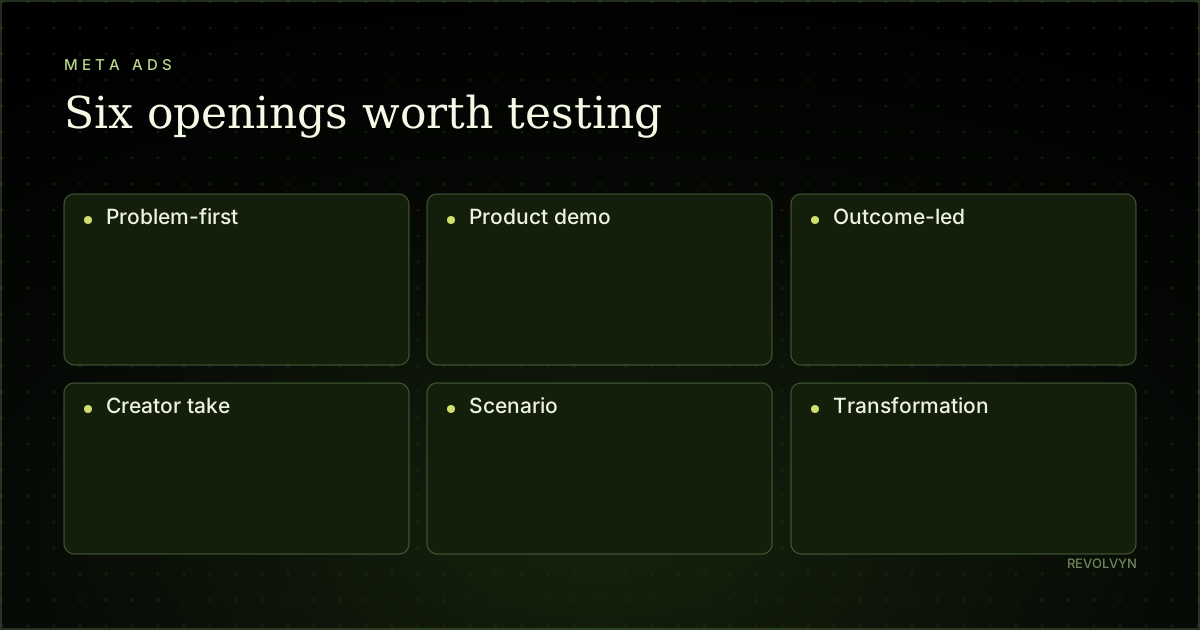
A useful testing set might include:
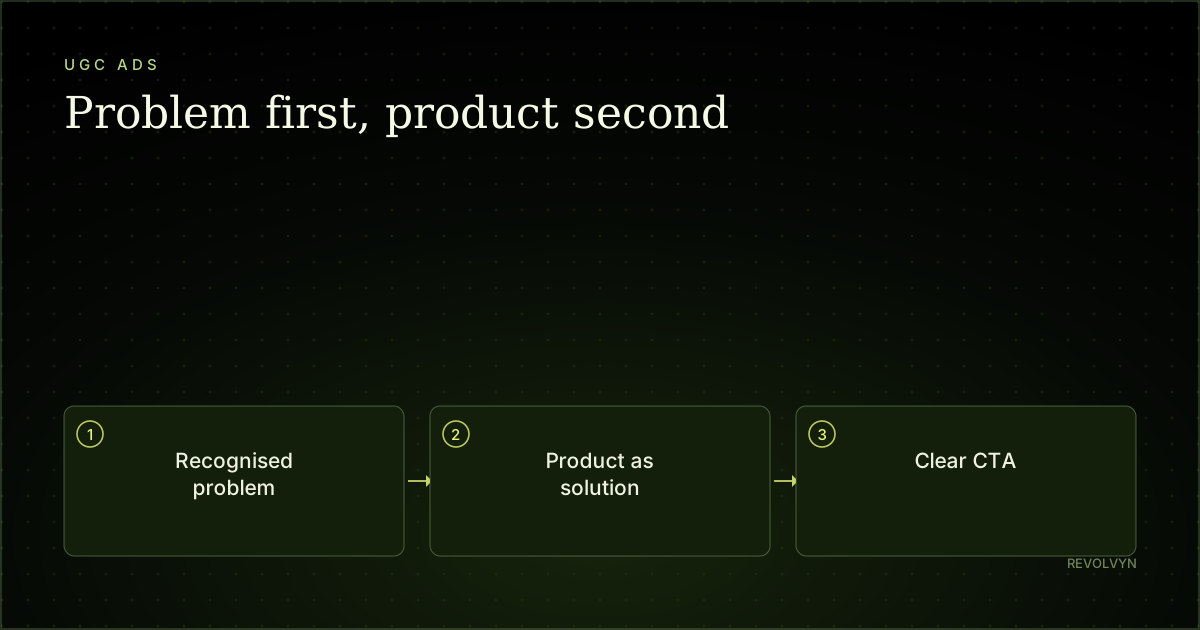
- problem-first opening
- product demonstration
- outcome-led opening
- founder or creator explanation
- customer-problem scenario
- visual transformation
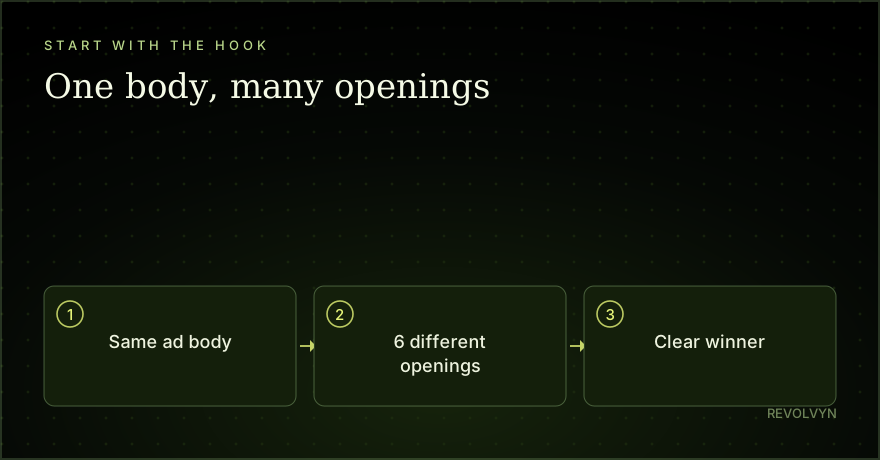
The body of the ad can stay relatively similar while the opening changes. That gives the team a clearer question to answer.
REVOLVYN's own research describes hook testing as an early part of its creative process, followed by format and audience testing.
Test ideas, not tiny edits
Changing a headline by one word is easy. It is also often a weak test.
A stronger creative test changes the idea being communicated.
Imagine a skincare product. One ad could lead with a common frustration. Another could show the routine. A third could focus on the product's texture or use. These are different communication angles.
If one angle consistently earns stronger downstream behaviour, you have learned something about the market.
That insight can then become several new creatives.
UGC and polished brand films can do different jobs
There is no rule that says a brand has to choose between UGC and polished production.
They can play different roles.
A creator-style video may feel conversational and native to the platform. A cinematic product film may communicate design, quality or brand world more effectively.
REVOLVYN's research notes this difference in its own campaign observations: UGC-style formats and polished brand films can earn attention differently, so both can be tested rather than assuming one format will always win.
Don't change everything at once
Suppose a campaign changes:
- creative
- audience
- landing page
- offer
- budget
on the same day.
If performance changes, what did you actually learn?
Testing becomes more useful when the team can identify what changed and connect that change to an observed result.
This does not mean every test needs laboratory-level isolation. Real advertising is messier than that. It means the team should maintain enough discipline to know why a new creative exists.
Watch beyond the click
A high click-through rate can look impressive while the campaign produces weak business outcomes.
The useful question is what happens after the click.
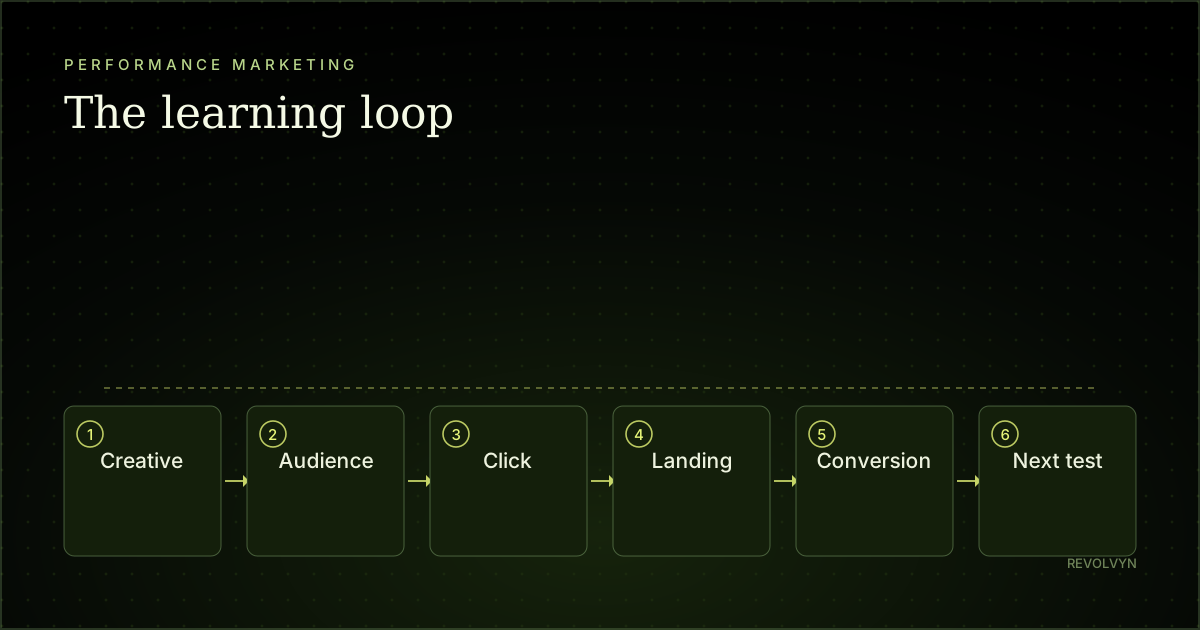
Look at the complete path:
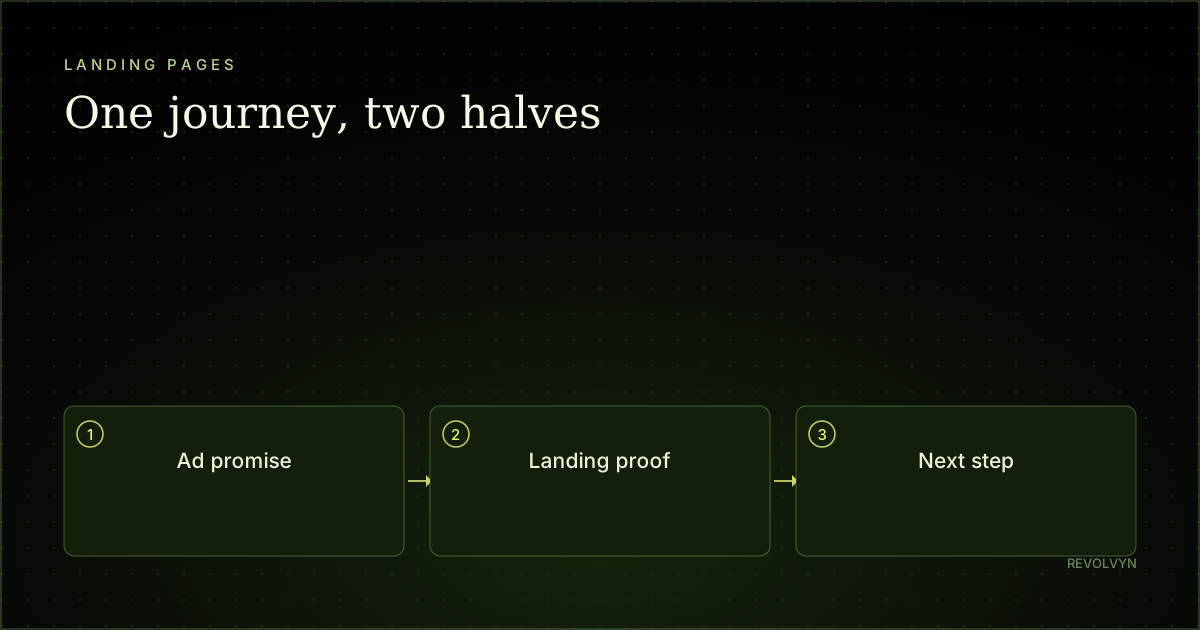
attention → click → landing page → intent → conversion → customer quality
If the ad earns attention but the landing page creates confusion, replacing the ad may not solve the real problem.
That is why REVOLVYN's performance service includes landing-page recommendations and conversion optimisation alongside Meta ads, retargeting and creative testing.
A practical testing rhythm
A simple operating rhythm is:
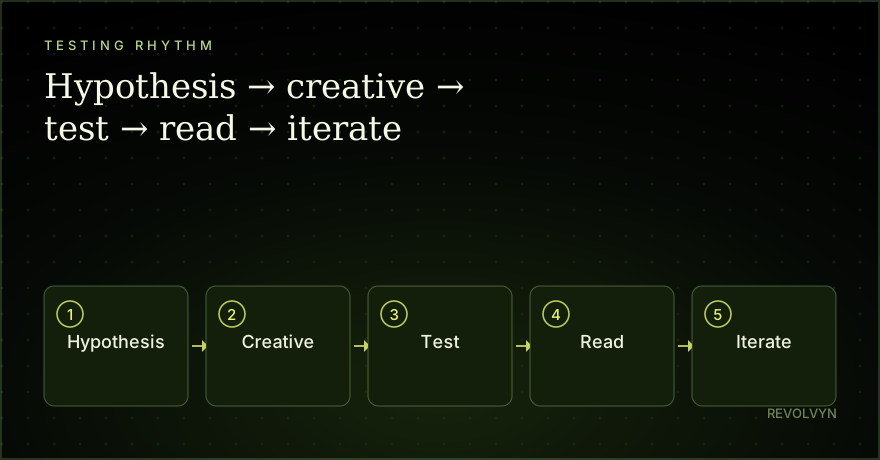
2. Make the creative. Create a version that clearly expresses that hypothesis.
3. Run the test. Give it enough room to produce a useful signal.
4. Read the result. Look at the complete funnel rather than one vanity metric.
5. Iterate. Keep the useful idea, change what failed, and create the next version.
The objective is not to find one “winning ad” and stop.
The objective is to build a library of winning ideas that can be recombined into the next generation of creative.
Editorial note — This article is written for educational purposes and uses examples and capabilities documented on REVOLVYN's public website. Specific campaign outcomes, pricing and client-specific performance should be verified for the relevant engagement rather than assumed from general marketing guidance.
Related articles
Need help connecting paid media, creative and conversion?
Talk to the REVOLVYN team. Start with a free 15-minute consultation — bring a product and a hypothesis, we’ll bring the creative engine.
Contact REVOLVYN