Creator & Influencer · 3 min read
Creator Marketing vs Influencer Marketing
Influencer marketing buys trusted access to an audience; creator marketing buys the ability to make native content. Plan for the job you’re hiring for.
Short answer: influencer marketing rents trusted access to an audience; creator marketing buys the ability to make native content. Most campaigns need a mix — use the guide below to decide the split, then see how creator content becomes paid UGC creative.
The terms “creator marketing” and “influencer marketing” are often used interchangeably.
That is understandable. There is a lot of overlap.
But for a brand planning a campaign, the distinction can be useful.
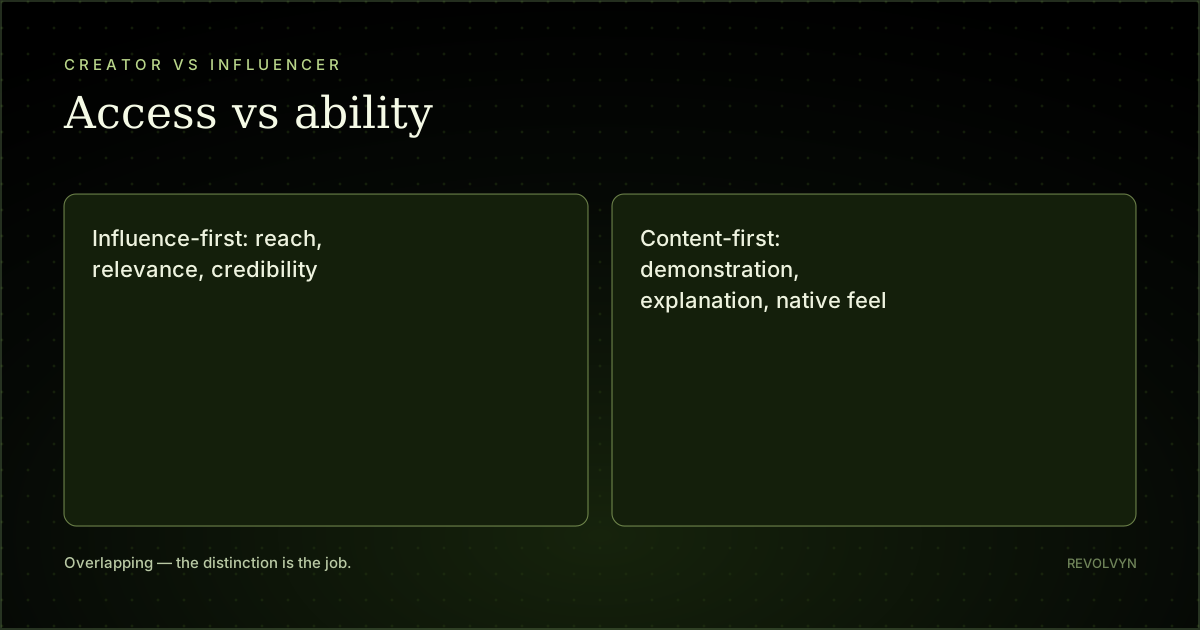
Influencer marketing starts with influence
The traditional influencer model often focuses on the creator's relationship with an audience.
The brand partners with the creator because that audience trusts their recommendations or follows their perspective.
Reach, relevance and credibility all matter.
Creator marketing starts with the creator's ability to make content
Creator marketing can put more emphasis on the content itself.
The creator may be valuable because they can demonstrate a product naturally, explain a problem clearly or produce content that feels native to a platform.
That content can sometimes have value beyond the creator's own audience.
The two approaches overlap heavily. The useful distinction is the job the creator is being hired to do.
Why this matters for campaign planning
Suppose a brand wants 20 videos demonstrating a product.
The campaign may not need 20 identical “influencer posts.”
It may need 20 different pieces of creator-led creative.
Another brand may care much more about access to a particular audience.
That campaign has a different creator-selection problem.
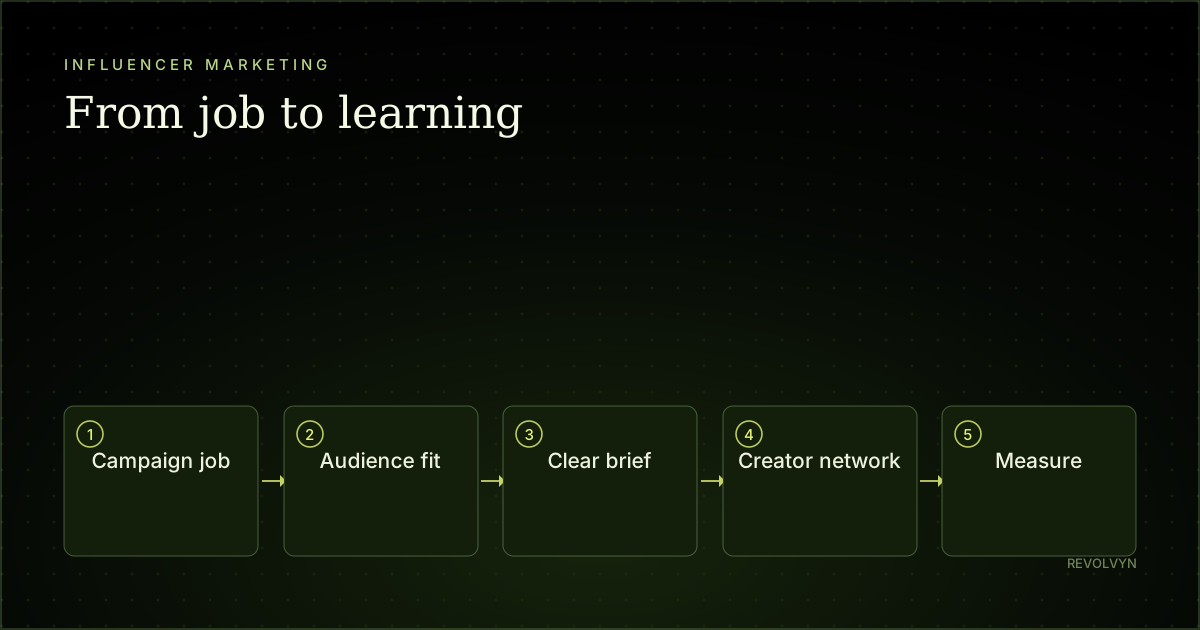
REVOLVYN's creator campaign service combines creator strategy and selection with concepts, scripts, coordination, editing, captions and monthly performance review. The network includes 110+ YouTubers.
That workflow allows the campaign to treat creators as both distribution partners and content collaborators.
Creator selection should follow the job
A practical framework is:
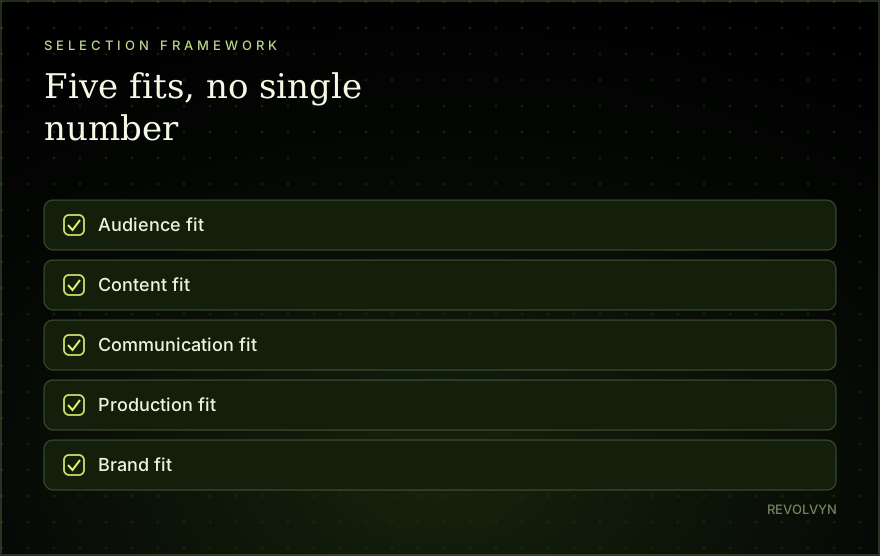
Content fit — can they make the type of content the campaign needs?
Communication fit — can they explain the product naturally?
Production fit — can the expected volume and format be delivered?
Brand fit — does the collaboration feel credible?
No single number answers all five.
Creator campaigns become stronger when the brief is clear
Creators need freedom, but they also need useful constraints.
A good brief should make the non-negotiables obvious:
- what the product does
- what must be shown
- what claims are approved
- who the audience is
- what the campaign is trying to achieve
Everything else can be shaped around the creator's natural style.
The best creator campaign is not necessarily the biggest one
A campaign can involve a single highly relevant creator or a network of creators.
The correct scale depends on the campaign objective, budget, product and creative requirement.
That is why “How many influencers should we hire?” is often the wrong first question.
A better first question is:
What should the audience understand, feel or do after seeing the content?
Once that is clear, creator strategy becomes much easier.
When to use each
Match the hire to the bottleneck. When trust is the bottleneck — a launch, a credibility category, a sceptical audience — rent access: pay for the audience relationship. When content is the bottleneck — paid-social testing, demonstrations, volume — buy ability: pay for native output you can run anywhere.
Use both when one asset must travel: a creator's organic post becomes the concept, and paid media becomes the distribution. The split is a media decision, not a loyalty test.
Amplification: the same asset, wider distribution
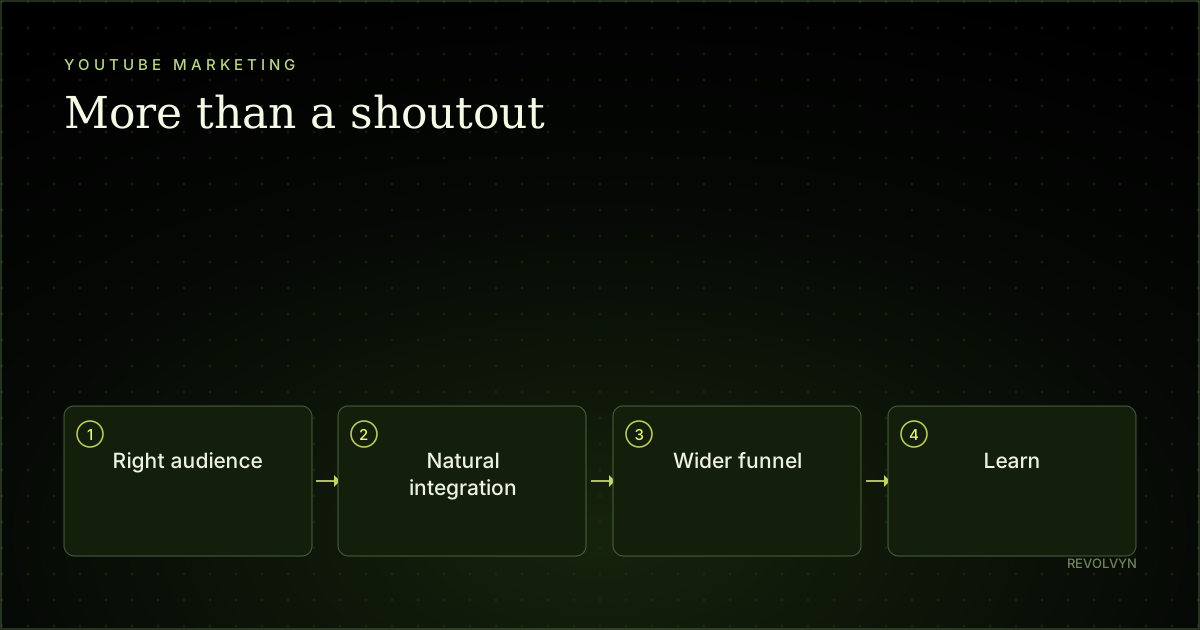
A strong creator post does not have to end on the creator's feed. With the creator's permission, agreed in the contract, the brand can run it as advertising — through its own account, or through the creator's handle via whitelisting — and give a proven angle paid reach.
Lock two things before anything runs: the usage window and the claims. Then let winners graduate into the paid testing cadence in our Meta ads creative testing guide, inside the loop performance marketing describes.
Where creator marketing connects with paid media
Creator content can become an input into a wider performance system.
A creator may discover an angle that works better than the brand's original advertising concept. That angle can then be developed into additional creative and tested through paid media.
This creates a useful loop:
creator insight → content → paid test → performance learning → new creator brief
That loop is more valuable than treating influencer marketing as a one-off post-buying exercise.
Editorial note — This article is written for educational purposes and uses examples and capabilities documented on REVOLVYN's public website. Specific campaign outcomes, pricing and client-specific performance should be verified for the relevant engagement rather than assumed from general marketing guidance.
Creator marketing: quick answers
What is the real difference between creator and influencer marketing?
Influencer marketing buys trusted access to an audience; creator marketing buys the ability to make native content. See how that content becomes paid UGC creative.
Which should my brand choose?
Follow the bottleneck: rent access when trust is scarce, buy ability when content is scarce. Most campaigns end up mixing both — see “When to use each” above.
How many creators do we need?
Start from the outcome — what the audience should understand, feel or do — then let objective, budget and product decide the scale. Headcount is the last question, not the first.
How do you measure creator campaigns?
By reuse and learning: which angles graduate into paid tests, and what each cycle teaches the next brief. Our monthly rhythm is strategy, selection, scripts, coordination, editing and review — bring a product and a hypothesis to a free consultation.
Related articles
Choosing what to do next?
Get a second opinion before you commit budget. Start with a free 15-minute consultation — no pricing games, no guaranteed miracles.
Contact REVOLVYN