Performance & Paid Media · 3 min read
PPC vs Meta Ads: Differences & When to Use Each
Search captures demand that already exists; Meta creates demand before the search. Most growing brands eventually need both.
PPC and Meta advertising are often discussed as if they are competing versions of the same thing.
They are not.
The biggest difference is usually how the audience arrives at the advertising experience.
Search advertising can meet someone who is already expressing intent. Meta advertising can create demand, introduce a product and build interest before the person searches for it.
For many brands, the two can work together.
Search starts with a query
When someone searches for a product, service or problem, the query itself gives the advertiser information about intent.
A person searching for a specific service may already know what they want.
That makes search useful for demand that already exists.
But search also has a limitation: you generally need people to search for the category, problem or brand in the first place.
Meta can create attention earlier
Meta ads can reach people before they actively search.
That makes creative particularly important.
The ad has to earn attention and communicate relevance without waiting for the user to type a query.
For a visual consumer brand, that can be a major advantage. Demonstrations, creator videos, product visuals and strong hooks can introduce a product to people who were not actively looking for it.
REVOLVYN's performance service covers Meta Ads, Google Ads and PPC, alongside retargeting, full-funnel testing and creative testing.
Is Meta ads PPC?
Strictly speaking, “PPC” in common use means search advertising — bidding on queries in Google Ads. Meta ads run on an auction too, but you buy audiences and discovery moments rather than queries.
The practical difference is what you are bidding on: intent someone already expressed, versus attention you have to earn. That is why brands often plan them together rather than picking a winner — see what performance marketing is.
So which one should a brand choose?
The answer depends on the demand structure.
Ask:
Do people already search for the thing I sell?
If yes, search can capture existing demand.
Then ask:
Can my product benefit from visual discovery, creator content or problem-led advertising?
If yes, Meta can help create and develop demand.
Many businesses can benefit from both.
The creative requirement is different
Search ads need strong alignment between the query, message and landing page.
Meta creative has a larger attention burden because the user was not necessarily looking for an advertisement.
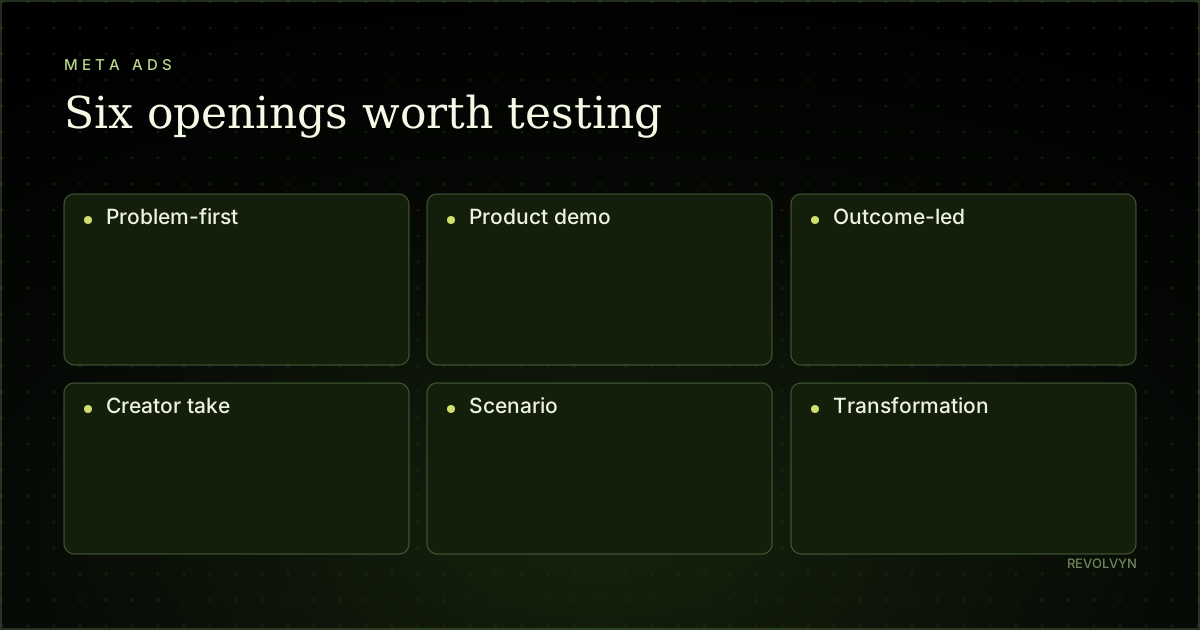
That means Meta campaigns often need a larger creative testing engine.
REVOLVYN's content production service is designed to produce 35–40+ videos per month, including scripts, shoots, editing, motion graphics, grading and captions.
The point is not to make a large number of videos for the sake of volume. It is to have enough creative material to test different ideas.
A simple way to think about the channels
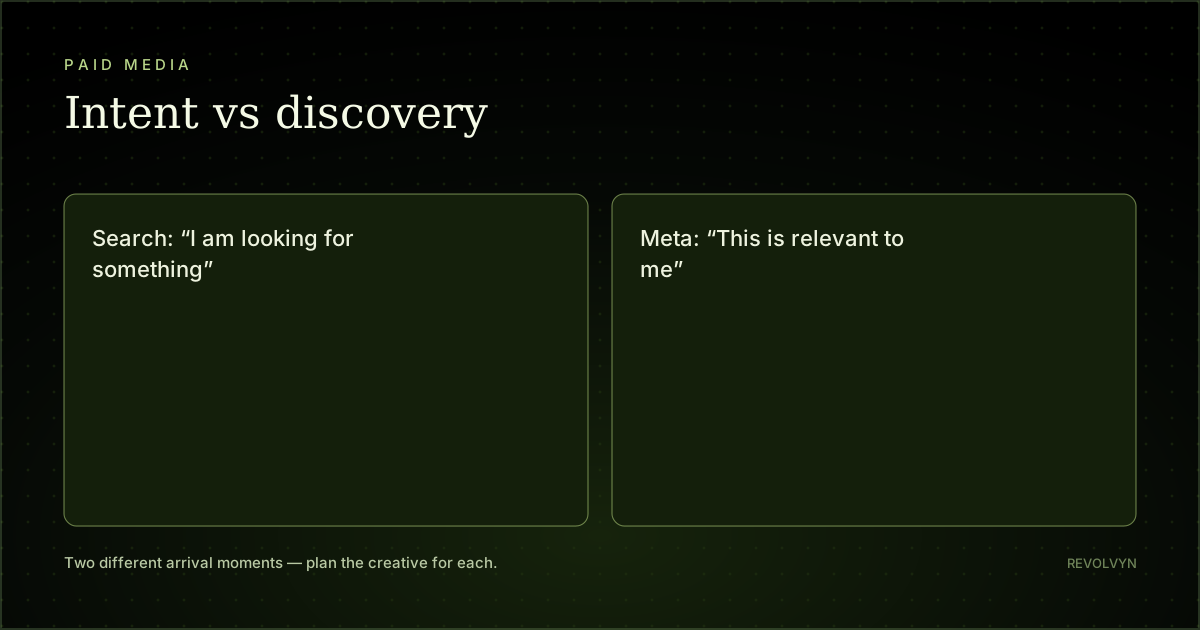
Google/PPC: “I am looking for something.”

Real customer journeys are less neat than those sentences, but the distinction is useful when planning a media mix.
What each side needs to work
Search needs alignment: the query, the message and the landing page must say the same thing. Our landing pages for paid campaigns guide covers that match.
Meta needs creative volume: hooks, demonstrations and creator-style UGC worth testing, following the cadence in our Meta ads creative testing guide. Fund the side whose prerequisite is weaker first.
Don't judge channels in isolation
A customer might discover a brand through a creator video, visit the website later through search and return through retargeting.
If you judge every channel only by its final click, you can miss how the journey actually works.
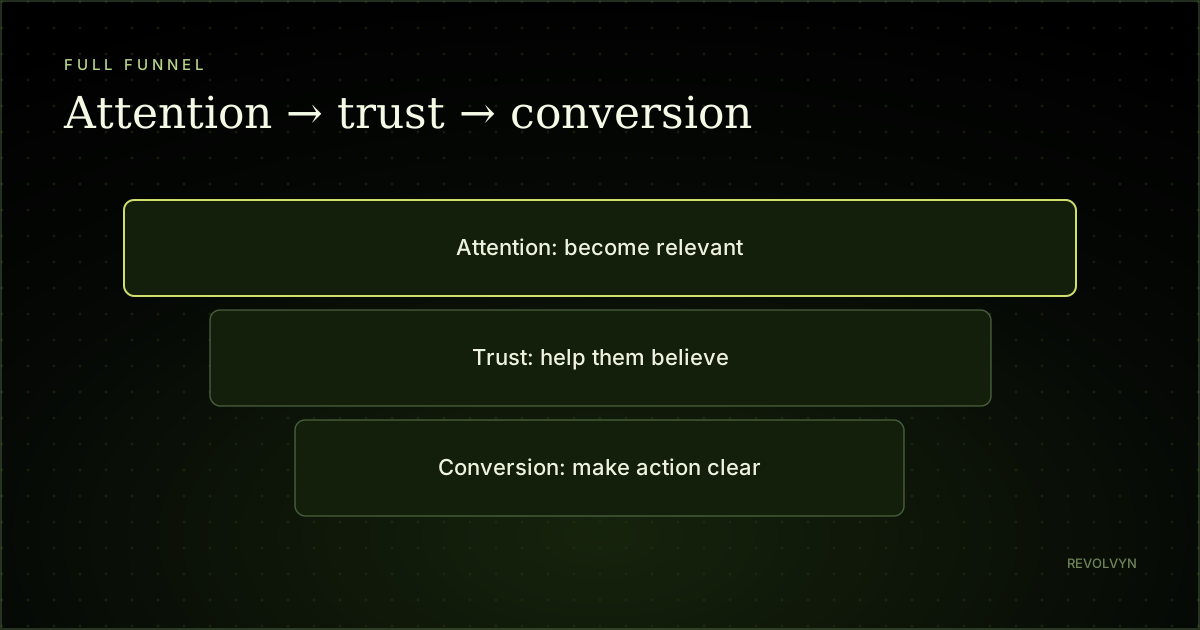
That is why full-funnel planning matters.
The right question is not “Meta or Google?”
It is:
Which combination of channels helps the brand create demand, capture demand and convert it efficiently?
Editorial note — This article is written for educational purposes and uses examples and capabilities documented on REVOLVYN's public website. Specific campaign outcomes, pricing and client-specific performance should be verified for the relevant engagement rather than assumed from general marketing guidance.
PPC vs Meta ads: quick answers
Is Meta ads PPC?
Not in the usual sense. “PPC” normally means search ads bought per query; Meta ads buy audiences and discovery in an auction feed. Plan them as complements, not rivals.
Which should a new brand start with?
Follow the bottleneck: existing search demand points to search ads; no demand yet points to Meta for discovery. Test small, read the results, then reallocate.
Can a small budget run both?
Yes — one tight search campaign plus one creative test on Meta, with the landing page message kept continuous. See landing pages for paid campaigns.
How do you measure across channels?
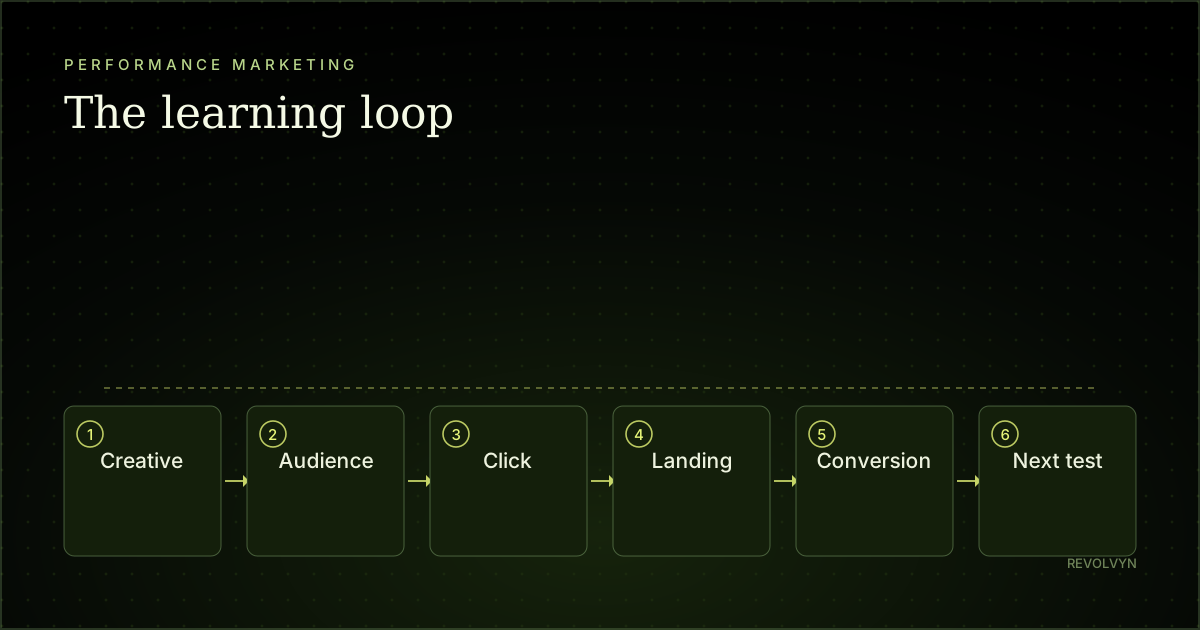
Read the journey, not just the last click: discovery credit, capture efficiency and retargeting reads together. See how retargeting works.
Related articles
Talk to REVOLVYN about your growth plan.
Have a campaign in mind? Start with a free 15-minute consultation and we’ll reply within one business day.
Contact REVOLVYN